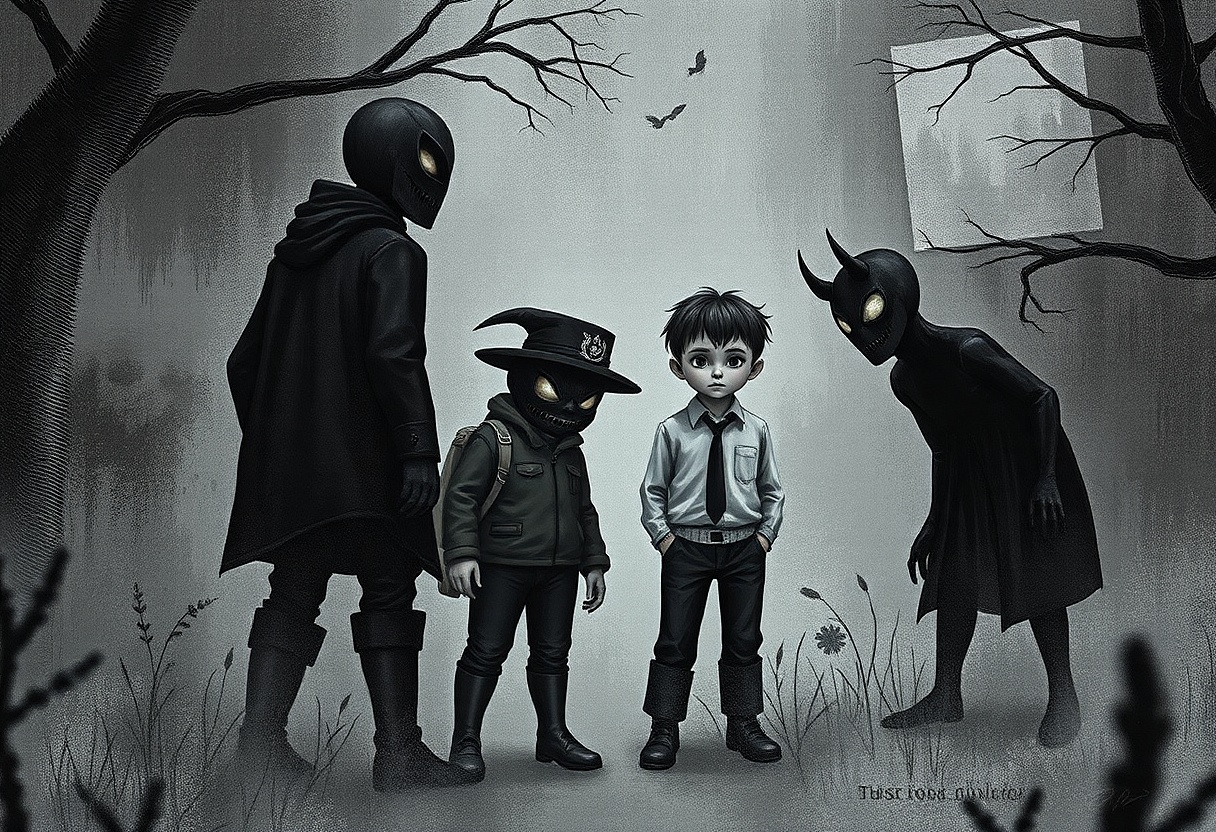
It sounds a bit like some kind of secret society, and we might not be far from the truth with that view. But let’s not turn children into monsters; they are people just like us, they just haven’t set boundaries and barriers yet and act much more directly than many adults are capable of.
There are huge differences among them, arising mainly from upbringing and family situation. A spoiled child will be more self-confident and, of course, more brash.
They will often become the leader of the group, coming up with new ideas, while others gather around them, trying to get their attention. Such a natural leader doesn’t necessarily have to be a spoiled child; others may possess the same potential, but self-confidence is always a prerequisite. People feel more at ease when following a confident person, as they gain a sense of assurance that someone knows what is going on and is in control of the situation.
A sort of hierarchy thus emerges within the group, based on the children’s personalities, with the leader at the top, who socializes with one or two of his friends, who are thereby elevated above the others; yet their position is often fragile, so they try to curry favor. Following this is a diverse crowd of those who, while unable to rise to the top, hide in the shadows so as not to accidentally draw attention to themselves and become the group’s target. Left on the outside are those who stand out, hold a different opinion and aren’t afraid to voice it, or are rejected by the group for any other reason. Such children are then often bullied and suffer from a lack of attention.
You’ll find the same hierarchy anywhere in human society, though among adults it isn’t usually as strict, since they’re already aware of the advantages offered by a wide network of acquaintances. When adults gossip about someone, they have no problem then socializing with the person they’ve been gossiping about as if they were a friend and gossiping with them about someone else. But when children don’t like someone, they make it clear by completely rejecting that person. Disputes can be small or large, and children’s opinions change as quickly as the weather, but one thing is certain: the moment someone high enough in the group takes a dislike to someone, that person’s life will become much harder, as everyone will compete to find ways to hurt them in order to curry favor.
The world of children can be terrifying in its own way, because the more fickle their opinions are, the more black-and-white their view of the world becomes. And the worst part is that adults cannot enter it.