start of 2017 may be an optimistic time for some of you. Especially if you’re deciding how to handle your spare cash. If you’re even a little interested in and follow economic developments, you’ve surely read, for example, that due to the rapid growth of the Czech economy and the subsequent rise in interest rates, the Czech koruna should strengthen. Perhaps by mid-2017.
What will this mean, in short, for each of us—as individuals?
· If the Czech koruna strengthens, imported goods, fuel prices, and vacations abroad will become cheaper. This may please many people.
· As for the export of goods, our exporters won’t be thrilled. And EU subsidies expressed in korunas will be lower in real terms.
How this all plays out will depend not only on inflation trends but primarily on the economic situation in the EU, which is our largest trading partner. All of this is, of course, linked to the policy of the European Central Bank (ECB). But how it all turns out will be revealed in the coming years.
Our government has also prepared tax changes for 2017. In short:
These changes are beneficial, for example, for:
· Parents, who can take advantage of a higher tax credit for their second and subsequent children. For the second child, a parent can deduct 17,004 CZK from their taxes on their 2016 tax return; for the third and subsequent children, 20,604 CZK. A family with two children will thus save up to CZK 2,400 (compared to the previous year), and a family with three children will save CZK 6,000.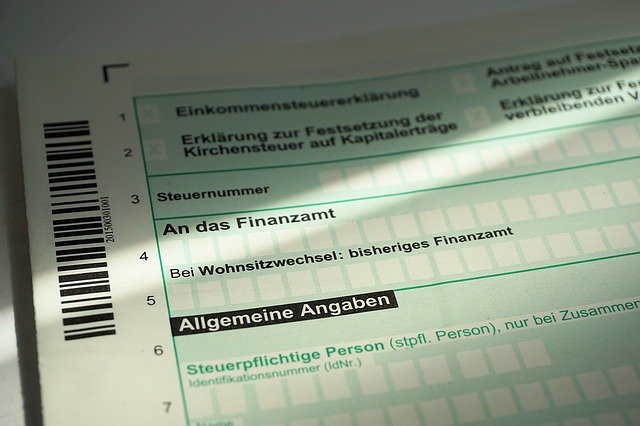
· Actual tax credit for preschool (not from the tax base): for 2016 taxes—up to CZK 9,900. For 2017, this credit will increase to CZK 11,000. Only one parent may claim this credit. The amount of expenses incurred will be confirmed by the kindergarten operator. Transportation and meals are not included in these expenses.
· The limit for pension and life insurance contributions is doubled for the 2017 tax base.
It increases from CZK 12,000 to CZK 24,000.
Higher bank interest rates—this is directly linked to the new Consumer Credit Act, which has been in effect since December 1, 2016. Banks are therefore conducting more thorough checks on a client’s ability to repay a loan. This is because if a bank fails to thoroughly assess a client’s ability to repay a loan, the contract becomes invalid and the client will not have to pay any interest. A client will be able to challenge the validity of the contract even three years after it is signed. And for this reason, interest rates on mortgage and consumer loans will not go down, but rather the opposite.
Financial advisors’ views and recommendations regarding savings and investments vary. As for savings, the average bank customer, due to low interest rates on savings accounts, has no real opportunity to grow their money effectively. The difference between a savings account and a checking account is negligible. So, whether your money grows is up to you.
For example: deciding to save for your retirement, regularly setting aside more than 2,000–3,000 CZK, could result in maximum annual tax savings of up to 3,600 CZK. But of course, not everyone can afford this.
Then there is another option for profit—taking advantage of state-subsidized products, such as building savings or supplementary pension insurance.
Instead of investing in gold, experts recommend a safe and promising investment for the coming period—investing your savings in investment diamonds.